
How to Manage Homework When Learning Feels Hard
Structured routines, task breakdown and calm emotional scaffolding for pupils and parents when homework feels persistently difficult.
How to Manage Homework When Learning Feels Hard
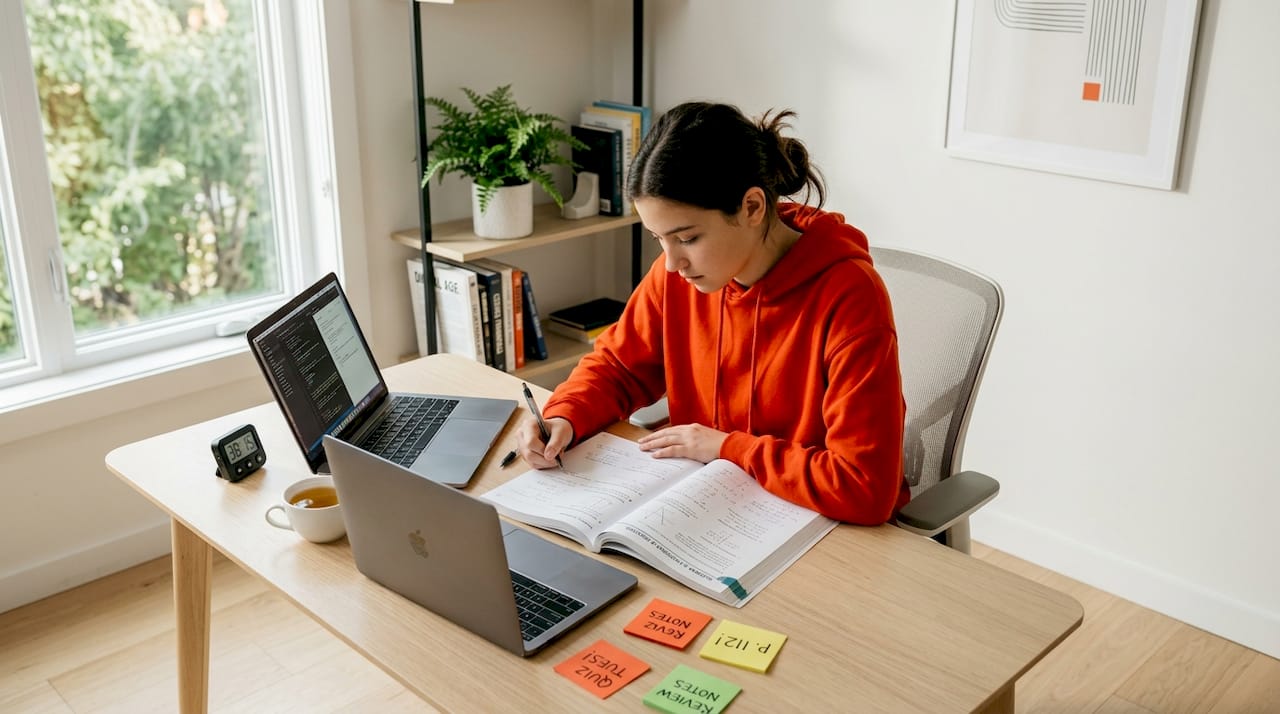
When homework feels persistently hard, three practical supports often help: structured routines, breaking tasks into small steps, and calm emotional scaffolding. If a student avoids assignments, shuts down at the desk, or takes far longer than expected, the difficulty is often linked to organisation, attention or emotional regulation rather than effort or intelligence alone. In a survey of almost 2,000 children aged 8 to 17, about two thirds (66%) said they felt most stressed about homework and/or exams (Children's Commissioner for England). This article gives parents and students a practical, evidence-informed framework for managing homework struggles without turning every evening into a conflict. Plain-language definitions are in our glossary.
How to manage homework when learning feels hard: building a routine that works
Homework is often as much about predictability as effort. When a student does not know when homework starts, where it happens, or what comes next, decision fatigue builds before a single problem is attempted. Guidance from the Child Mind Institute and similar organisations recommends a consistent homework time and location to reduce hassles and power struggles. That predictability removes a layer of cognitive load that struggling learners cannot afford to spend.
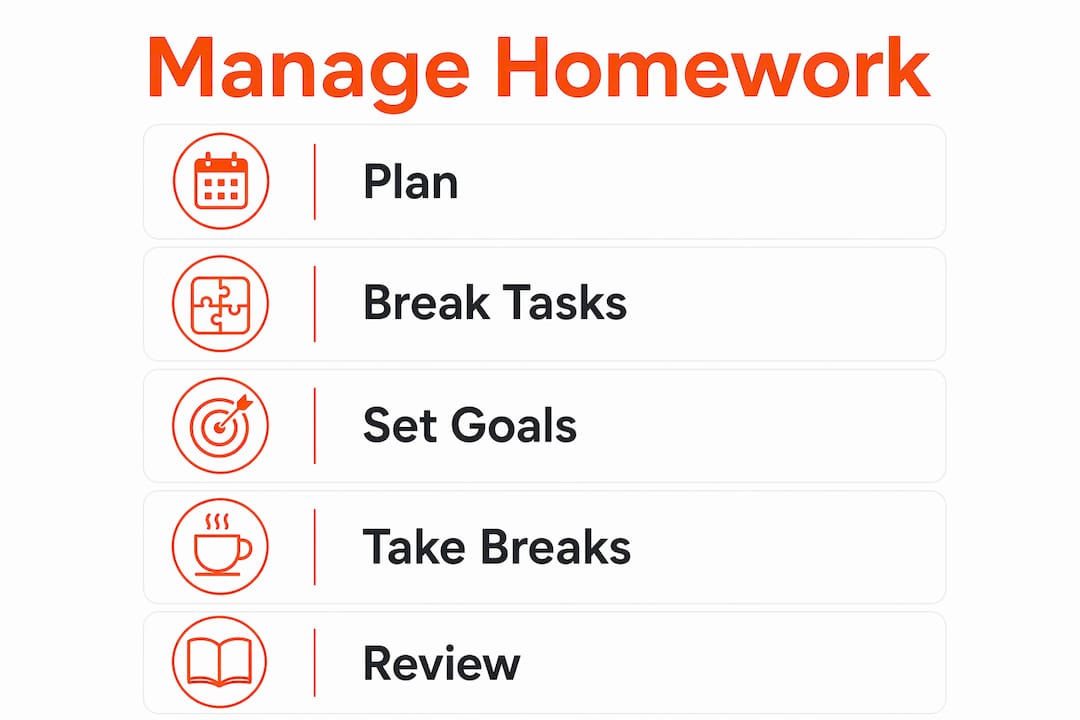
Setting up a functional routine involves four concrete steps:
- Choose a fixed start time that aligns with the child's energy window. Starting before fatigue sets in usually works better than late-night sessions, though the right time varies by age and after-school commitments.
- Designate a low-distraction workspace. This does not require a dedicated room. A cleared kitchen table with a consistent chair, adequate light, and no background television is sufficient. The physical cue of the space signals the brain that work is beginning.
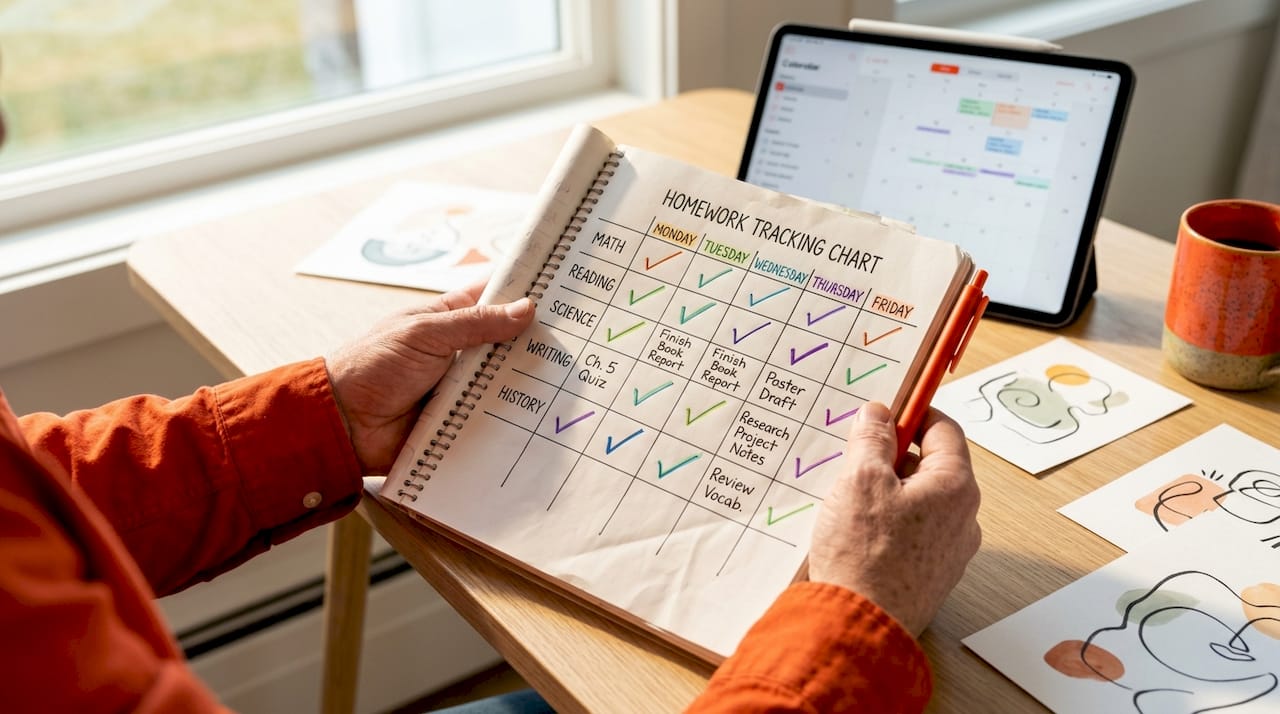
- Use a written planner or assignment tracker. Listing each assignment with an estimated duration gives the student a map of the session. Knowing that maths takes fifteen minutes and reading takes ten minutes is far less threatening than an undefined pile of homework.
- Build in scheduled breaks and rewards. The Child Mind Institute recommends incentives that reward starting behaviours, such as sitting down and completing a small chunk, rather than only rewarding final grades. Immediate positive reinforcement is more motivating for students who struggle with delayed gratification.
Parents play a critical role in the first two to three weeks of any new routine. The setup phase requires active monitoring, gentle redirection, and consistent follow-through before the routine becomes self-sustaining.
Pro Tip: Set a visual timer on the desk during homework time. The physical countdown reduces anxiety about how long this will take and gives students a concrete endpoint to work toward.
For pupils with dyslexia or other specific learning difficulties, the British Dyslexia Association recommends a little and often approach rather than long sessions. A homework feedback system that tracks completion patterns over time can also reveal which subjects or times of day consistently produce the most resistance.
What is the best way to break homework into manageable steps?
Breaking large homework tasks into small, manageable steps is one of the most direct methods for reducing avoidance in students with executive-function or attention challenges. Edutopia recommends reducing the first step to a minimal action, such as opening a folder or writing a heading, to create early momentum. That first micro-win shifts the student's internal narrative from "I can't do this" to "I already started."
The micro-wins framework operates on a simple principle: each small success raises self-efficacy, which raises willingness to attempt the next step. Setting minimum viable goals for difficult nights, such as completing one practice problem or spending fifteen minutes on review, prevents failure cycles. This is especially relevant for challenging coursework in subjects like algebra, essay writing, or foreign language grammar, where the gap between current ability and task demand feels insurmountable.
Practical strategies for breaking tasks down include:
- Define three small wins per session. Before homework begins, identify three specific, completable actions. "Finish the worksheet" is not a small win. "Answer questions one through three" is.
- Use timed study bursts of 10 to 15 minutes. Short, timed work bursts with breaks are commonly recommended for students who struggle with sustained attention.
- Sequence tasks from easiest to hardest. Starting with a subject the student finds manageable builds momentum before tackling the most difficult material. This is strategic confidence-building, not avoidance.
- Acknowledge every completed step. Verbal recognition from a parent, even a brief "you finished that section," reinforces the behaviour and signals that progress is visible.
Pro Tip: Write the three small wins on a sticky note and place it at the top of the workspace before the session starts. Crossing each one off provides a physical record of progress that students can see.
Homework avoidance is often linked to executive function challenges (planning, starting, sustaining attention), not only motivation (Child Mind Institute). Structuring tasks into clear sequences while coaching students on when to ask for help significantly reduces that avoidance. This applies equally to students with diagnosed neurodevelopmental conditions and those without formal diagnoses who still find certain subjects persistently difficult.
How does emotional support reduce homework difficulty?
Students learn more effectively when they know someone believes in their ability and provides support after failure. This is a documented behavioural pattern with direct implications for how parents should respond when a student gets something wrong or gives up.
Edutopia recommends emotional anchors as a concrete tool: brief supportive notes placed in a student's homework folder before a session begins, or a calm verbal check-in at the start of work time. These signals reduce the psychological weight of the task before it begins.
Structuring emotional support during homework involves three steps:
- Respond calmly and quickly after errors. When a student gets an answer wrong or expresses frustration, the adult's first response sets the tone. A calm, factual reply, such as "that one was tricky, let's look at it together," prevents the emotional escalation that turns a single mistake into a session-ending shutdown.
- Facilitate brief collaboration before independent work. Working through the first problem together before stepping back reduces the isolation that makes difficult tasks feel impossible. This is not doing the work for the student. It is demonstrating that the work is approachable.
- Reduce isolation through regular check-ins. A parent who checks in every ten to fifteen minutes, without hovering, signals ongoing availability. Students who feel monitored in a supportive rather than evaluative way show greater persistence on difficult tasks.
Parents seeking to deepen their role can find structured guidance on supporting schools in identifying learning difficulties, which includes communication frameworks for sharing homework observations with teachers.
Do movement breaks actually improve homework focus?
Short active movement breaks of 5 to 10 minutes can help reset attention during study periods. Evidence for school-based active breaks is mainly from classroom settings: a CDC Community Guide review found that classroom-based physical activity breaks were associated with improved on-task behaviour in some studies, though evidence is heterogeneous and mostly from primary school contexts. Applying the same principle at home is reasonable practice, even if it is less directly studied.
Physical movement increases cerebral blood flow and can reset the attentional systems that become fatigued during sustained cognitive effort. For students managing study stress, scheduled breaks also prevent frustration from building before it peaks.
Effective movement break options that work at home include:
- A five-minute walk around the block or through the house
- Ten jumping jacks or a brief yoga sequence
- A structured physical game with a sibling or parent, such as catch or a short dance routine
- Stretching exercises tied to a short timer
The key is that breaks are scheduled, not reactive. A break taken because a student is already frustrated is damage control. A break built into the routine before frustration peaks is prevention.
Homework, SEND support and reasonable adjustments
In England, schools must not assume a diagnosis is required before identifying SEN or putting support in place (SEND Code of Practice 2015). If homework consistently causes substantial disadvantage, parents can discuss reasonable adjustments with the school. The EHRC notes that having SEN support or an EHCP does not remove the reasonable adjustments duty. Practical adjustments might include reduced copying, alternative response formats, or agreed time limits. See our guide on reasonable adjustments in UK schools.
When should persistent homework struggles prompt professional evaluation?
Persistent homework struggles that do not respond to routine, task-breaking, emotional support, and movement breaks may indicate an underlying learning difficulty, attention deficit hyperactivity disorder (ADHD), or sensory processing difficulty. KidsHealth advises parents to maintain a daily notebook documenting homework patterns and to notify teachers when assignments repeatedly cause significant distress, as this record supports referral for further assessment.
| Situation | Recommended response |
|---|---|
| Occasional resistance to starting homework | Adjust routine timing, add a micro-win structure |
| Consistent struggle with one specific subject | Communicate with the subject teacher, consider targeted tutoring |
| Homework takes far longer than peers | Discuss with the SENCo or class teacher; keep a record of patterns |
| Emotional meltdowns most evenings regardless of subject | Consult school pastoral team, GP or educational pathway (CAMHS where appropriate) |
| Physical complaints (headaches, eye strain) during reading tasks | Request vision and hearing screening before academic assessment |
Understanding when to seek professional support for learning difficulties is not a failure of parenting. It is the appropriate next step when the scaffolds that work for most students are not sufficient for a particular child. Around 10% of people in the UK are thought to be dyslexic (BDA), and NICE estimates around 5% of children have ADHD. Early support and adjustments can help, though schools can put support in place without waiting for a formal diagnosis.
Key takeaways
| Point | Details |
|---|---|
| Routine reduces overwhelm | A fixed homework time and location removes decision fatigue before work begins. |
| Micro-wins build confidence | Starting with a task under two minutes creates momentum and raises self-efficacy. |
| Emotional support increases persistence | Calm responses after errors and brief collaboration reduce avoidance and isolation. |
| Movement breaks can reset focus | Scheduled 5 to 10 minute active breaks are associated with improved on-task behaviour in some school-based studies. |
| Persistent struggles need a school conversation | Homework difficulty that resists all supports may warrant discussion with the SENCo and possible referral. |
What the evidence suggests in practice
The most common misconception is that a student who avoids homework is lazy or unmotivated. In many cases, avoidance is a rational response to repeated failure. When a child has sat at a desk and tried hard and still gotten it wrong, the desk becomes a place associated with inadequacy. The avoidance is self-protective, not defiant.
What often works is reducing the stakes of the first attempt. When a student is told that the only goal for the next ten minutes is to write their name and open their book, the task is no longer a test of their intelligence. It is just a small action. And small actions are survivable.
The adult's emotional regulation matters too. A parent who sits down calmly and says "let's just look at the first question together" produces a different outcome than one who arrives at the desk already frustrated by the resistance. The student reads the adult's state before they read the assignment.
There is no single method that works for every learner. Students whose needs are real but not severe enough to trigger formal assessment often need structured support, consistent emotional safety, and adults who are paying close attention. For pupils building evidence at home in Google Docs, see why homework patterns reveal struggles.
How Qwixl supports students when homework feels overwhelming

Qwixl:Milo integrates with Google Docs to offer in-context support while pupils work on assignments at home. It surfaces four processing indicators (signals, not diagnoses) that can help families and schools notice patterns worth discussing, especially while waiting for formal assessment. For school-side assignment workflows and class-level insight, Qwixl:Homework offers a complementary teacher and SENCo view. Neither tool diagnoses conditions or replaces statutory SEN processes.
FAQ
What is the most effective way to start a difficult homework session?
Reduce the first step to an action that takes under two minutes, such as opening a folder or writing a heading. Edutopia's research shows this creates early momentum and shifts a student's self-perception from avoidance to engagement.
How long should homework sessions be for struggling students?
Timed study bursts of 10 to 15 minutes with short breaks are more effective than extended uninterrupted sessions. The BDA also recommends a little and often approach for pupils with dyslexia.
When should a parent contact the school about homework struggles?
Contact the teacher or SENCo when assignments repeatedly cause significant distress or take far longer than expected. Keeping a daily notebook of homework patterns provides concrete evidence to support that conversation.
Do movement breaks help students who struggle to focus on homework?
School-based studies suggest active breaks of 5 to 10 minutes can improve on-task behaviour in some contexts. Scheduled breaks work better than reactive ones because they prevent frustration rather than responding to it.
Can homework difficulty indicate a learning disability or ADHD?
Persistent difficulty that does not respond to routine adjustments, task-breaking, and emotional support may indicate an underlying neurodevelopmental condition such as dyslexia, dyscalculia, or ADHD. Discuss concerns with the school and follow local referral pathways.
Sources and further reading
- Children's Commissioner for England, Children and stress
- British Dyslexia Association, Homework advice
- Child Mind Institute, Strategies to make homework go more smoothly
- SEND Code of Practice 2015